Abu Simbel from AswanDistance & travel timeEarly departure tipsTours, prices & plans How far is…
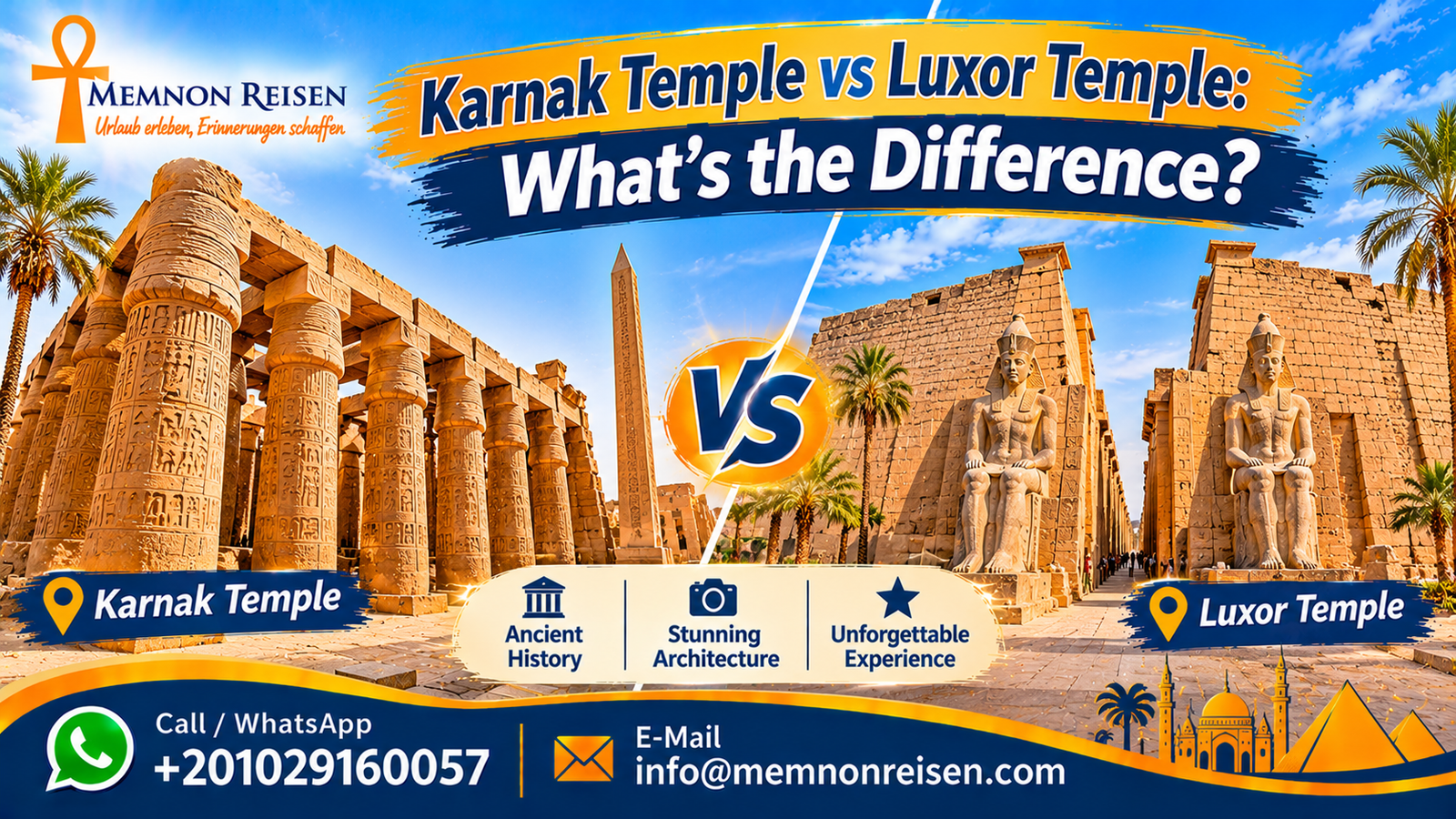
Karnak Temple vs Luxor Temple: What’s the Difference?
Karnak Temple vs Luxor TempleLuxor, East BankDifferences & what to seeTours, prices & plans
What is the difference between Karnak Temple and Luxor Temple? Karnak is a vast, sprawling complex of temples, halls and obelisks that grew for around 2,000 years and was the main religious centre of ancient Thebes. Luxor Temple is a smaller, more compact and better-preserved temple in the middle of modern Luxor, built mainly under Amenhotep III and Ramesses II and famous for its beautiful evening lighting. If you only have time for one, choose Karnak. If you have time for both, they complement each other perfectly.
This guide compares the two temples side by side: history, size, highlights, time needed, the best time of day to visit and how they connect. It also shows how each temple fits into the real Luxor excursions and “from” prices on our own price list, and ends with three sample plans, so you can decide exactly which temple, or both, to include in your trip.
Check before you go
Opening hours, ticket prices, restoration work and which areas are open can change, so we do not quote exact fees or times here. Your Egyptologist will confirm what is open on the day. On our tours, we explain what is included, including entrance fees, when you book.
In this guide
Quick answer: Karnak or Luxor Temple?
| If you want… | Choose | Why |
|---|---|---|
| The biggest, most impressive site | Karnak | The largest temple complex in Egypt |
| One temple on a short day trip | Karnak | The must-see highlight of the East Bank |
| A shorter, more compact visit | Luxor Temple | Smaller, easy to see in about an hour |
| An evening visit with beautiful lighting | Luxor Temple | Famous for its night illumination |
| The full picture of ancient Thebes | Both | They were once connected by a ceremonial avenue |
Karnak Temple: the greatest temple complex in Egypt
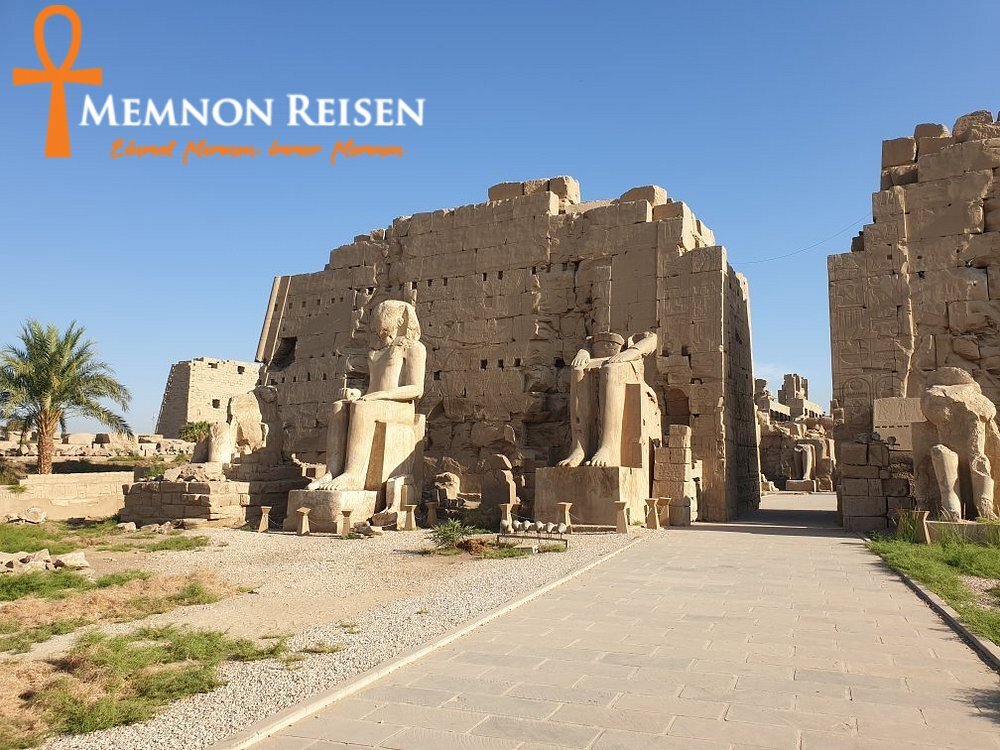
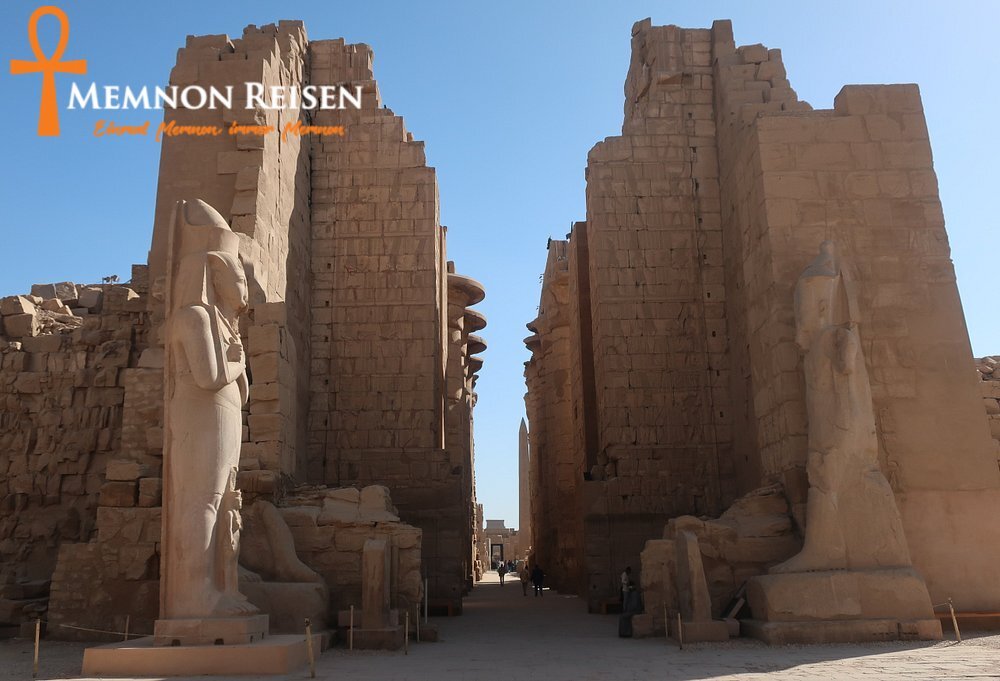
Karnak is not a single temple but a huge precinct of temples, pylons, courtyards, chapels and obelisks, centred on the sanctuary of the god Amun-Ra. Pharaohs added to it for roughly two thousand years, from the Middle Kingdom to the Ptolemaic period, so it reads like a stone history book of ancient Egypt.
Highlights
Great Hypostyle Hall
A forest of 134 giant columns, with the central rows rising to roughly 21 metres, carved with reliefs.
Obelisks
Including the obelisk of Hatshepsut, one of the tallest ancient obelisks still standing in Egypt.
Pylons and courtyards
Monumental gateways built by successive pharaohs, leading deeper towards the sanctuary.
Sacred Lake
The ritual lake where priests purified themselves, and a quiet spot to rest.
Pros and cons
Pros
✓Spectacular scale and detail
✓A complete story across many eras
✓Great for photos
Cons
✕Large, with lots of walking
✕Hot and busy in the middle of the day
✕Confusing without a guide
Luxor Temple: elegant, compact and beautifully lit
Luxor Temple stands right in the heart of the modern city, on the east bank of the Nile. It was built mainly under Amenhotep III and extended by Ramesses II, and was linked to the Opet Festival, when statues of the gods travelled in procession from Karnak. Unlike Karnak, it is one coherent temple, so you can see it in a relaxed visit.
Highlights
Entrance pylon and obelisk
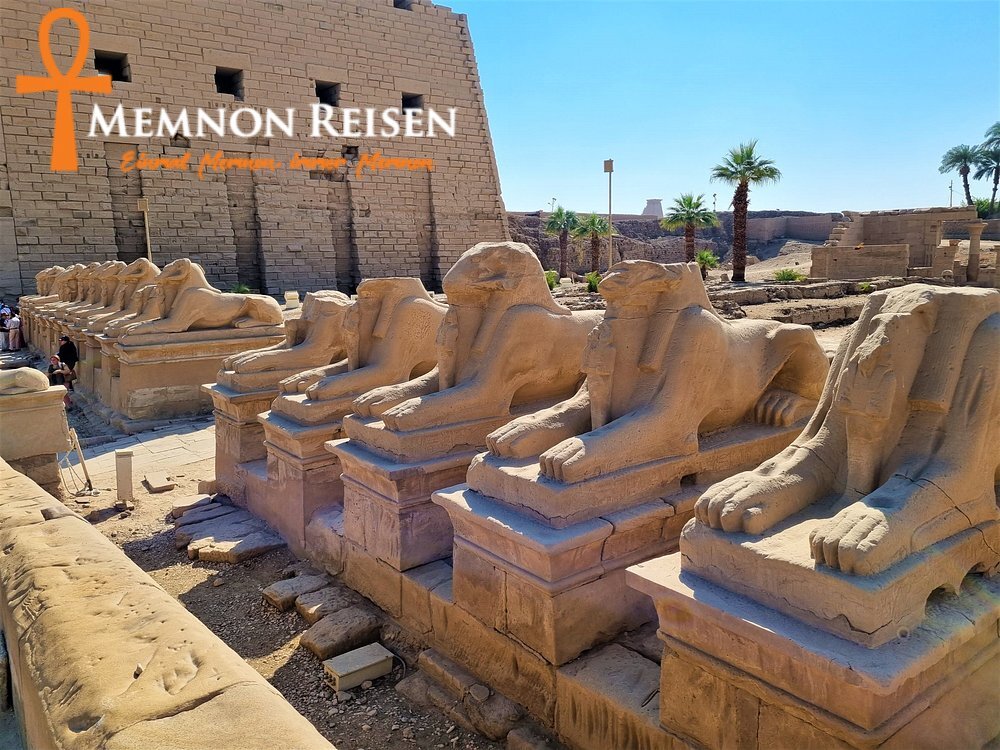
Ramesses II statues and an obelisk guard the entrance. Its twin now stands in Paris.
Colonnade of Amenhotep III
An elegant row of tall papyrus columns that looks spectacular at sunset.
Layers of history
Pharaonic halls, Roman additions and a mosque built within the temple walls.
Night lighting
The stone glows after dark, which many visitors find the most atmospheric time.
Pros and cons
Pros
✓Compact, easy to see in about an hour
✓Beautiful at sunset and at night
✓Easy to combine with the Nile corniche
Cons
✕Much smaller than Karnak
✕Often skipped on short day trips
✕City noise nearby
Karnak vs Luxor Temple: side-by-side comparison
| Feature | Karnak Temple | Luxor Temple |
|---|---|---|
| Type | A vast complex of many temples | A single coherent temple |
| Location | North of central Luxor, east bank | Centre of Luxor, on the Nile corniche |
| Main builders | Many pharaohs over roughly 2,000 years | Mainly Amenhotep III and Ramesses II |
| Dedicated to | Amun-Ra, with other gods | Amun-Ra, linked to the Opet Festival |
| Signature feature | Great Hypostyle Hall and obelisks | Colonnade, Ramesses II statues, night lighting |
| Time needed | About 2 to 3 hours | About 1 to 1.5 hours |
| Best time of day | Early morning | Late afternoon or evening |
| Best for | First-timers and history lovers | Short visits, photographers, evening plans |
How the two temples connect
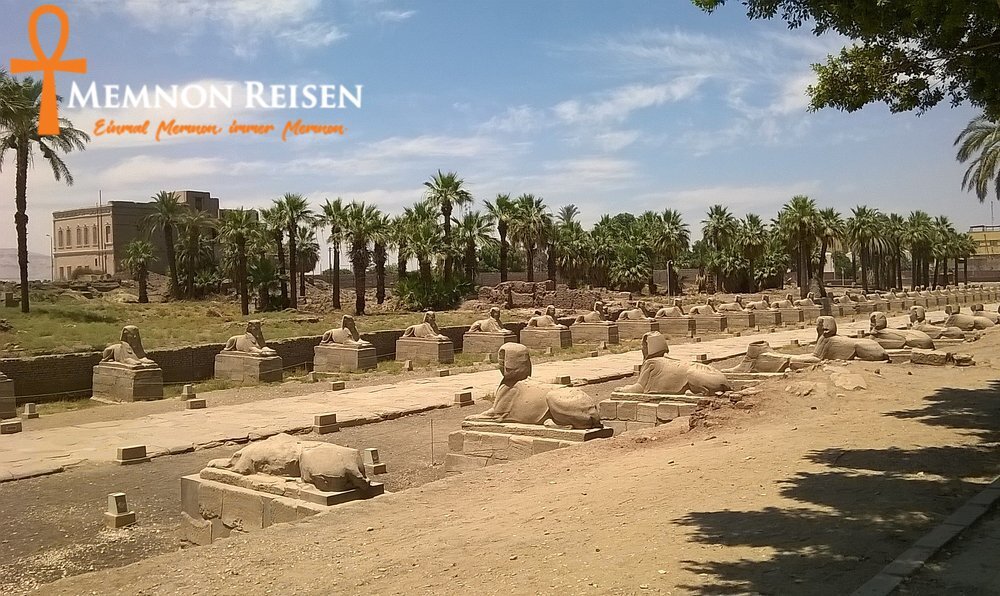
In ancient times, a processional road lined with sphinxes, the Avenue of Sphinxes, linked the two temples over roughly 2.7 kilometres. During the annual Opet Festival, priests carried the statues of the gods along it from Karnak to Luxor Temple and back. The avenue has been excavated and restored in recent years, which is why many guides now present the two temples as two ends of one sacred route. Whether you can walk part of it depends on what is open, so ask your guide on the day.
Seeing both makes the story click: Karnak is the great state temple of Amun, and Luxor Temple is where the festival culminated.
Best time of day and year to visit
Karnak: go early
• Cooler air and softer light
• Fewer tour groups at the start
• Better for the Hypostyle Hall photos
Luxor Temple: go late
• Golden light at sunset
• Beautiful night illumination
• Cooler for the walk and the colonnade
Time of year: From October to April, Luxor is warm and comfortable for sightseeing. In summer it gets very hot, so start early, bring water, a hat and sun protection, and plan indoor breaks. See our guide to what to wear in the desert for useful tips on sun and dust, and Hurghada temperatures by month for seasons on this coast.
Which of our tours include which temple?
All our Luxor excursions are private with an English-speaking Egyptologist, hotel pick-up and no hidden fees. These are the “from” prices per person from our price list for a minimum of 2 persons from Hurghada. Prices vary by group size and pick-up location, and we confirm the exact program, the temples included and what is covered, including entrance fees, when you book.
| Tour | Karnak | Luxor Temple | From |
|---|---|---|---|
| Private Day Trip to Luxor (Valley of the Kings, Karnak, Hatshepsut, Colossi, Nile boat) | Yes | Ask us | 90 € |
| Luxor with a Difference (Valley of the Queens, Medinet Habu, Deir El-Medina) | Ask us | Included in the program | 110 € |
| Luxor Temple, Luxor Museum and Dendera | Ask us | Yes | 95 € |
| Luxor 2 Days with Overnight Stay (east and west bank) | Yes | Yes | 250 € |
| Luxor Day Trip with Hot Air Balloon | Yes (classic tour) | Ask us | 240 € |
| Luxor and Aswan 3 Days (Karnak, Valley of the Kings, Abu Simbel, Philae) | Yes | Ask us | 480 € |
| Cairo and Luxor 2 Days by Plane | Yes | Ask us | 459 € |
The simple rule: the classic one-day Luxor tour focuses on Karnak and the west bank sights. If you also want Luxor Temple, choose a two-day program, the Luxor Temple, Museum and Dendera tour, or ask us to add it. See all programs on our Hurghada tours and excursions page and in the price list. Staying in Marsa Alam or Port Ghalib? See Marsa Alam tours, where Luxor is closer.
Three sample plans
Plan A: a classic Luxor day with Karnak
EarlyHotel pick-up for the long drive to Luxor, roughly four hours each way. We confirm the time after booking.
MorningWest bank: Valley of the Kings, Hatshepsut Temple and the Colossi of Memnon with your Egyptologist.
MiddayTraditional lunch in Luxor.
AfternoonKarnak Temple and a Nile boat trip (from 90 €), then the drive back to your hotel.
Plan B: two days in Luxor (both temples, no rush)
Day 1East bank. Karnak in the morning light, a rest at the hotel, then Luxor Temple at sunset and after dark.
Day 2West bank. Valley of the Kings, Hatshepsut Temple and the Colossi of Memnon, then the drive back.
OptionLuxor 2 Days with Overnight Stay (from 250 €) or add the hot air balloon at sunrise (Luxor trip from 240 €), subject to weather and operations.
Plan C: a temples-and-culture week from Hurghada
Day 1Arrival. Private transfer (from 20 € per vehicle to Hurghada).
Day 2Sea day.Orange Bay (from 45 €).
Day 3Luxor. Karnak and the west bank (from 90 €).
Day 4Rest day. Beach and pool.
Day 5Luxor Temple, Museum and Dendera. A second temple day (from 95 €), a different and quieter experience.
Day 6Slow day. Desert safari (from 45 €) or a city tour (from 12 €).
Day 7Departure. Private transfer to the airport.
For a full week that also covers the sea, desert and Cairo, see our 7 days in Hurghada itinerary, and compare the Cairo museums in Grand Egyptian Museum vs Egyptian Museum.
Frequently asked questions: Karnak vs Luxor Temple
What is the difference between Karnak and Luxor Temple?
Karnak is a huge complex of many temples built over about 2,000 years and dedicated mainly to Amun-Ra. Luxor Temple is a smaller, single temple in the centre of the city, built mainly under Amenhotep III and Ramesses II and known for its evening lighting.
Which is better, Karnak or Luxor Temple?
Karnak is the bigger and more impressive site, so it is the one to choose if you have time for only one. Luxor Temple is shorter to visit and especially beautiful at sunset and at night.
Can I see both temples in one day?
Yes, if you start early, but a day trip from the Red Sea already involves a long drive, so doing both can be tiring. A two-day program or an overnight stay in Luxor gives you much more time.
How long do I need at each temple?
Plan about two to three hours at Karnak and about one to one and a half hours at Luxor Temple, depending on how much detail your Egyptologist covers.
Is Luxor Temple worth visiting at night?
Many visitors say yes. The temple is lit after dark, and the colonnade and statues look dramatic. An overnight stay in Luxor makes an evening visit easy.
Does your standard Luxor day trip include Luxor Temple?
Our classic Luxor day trip focuses on the Valley of the Kings, Karnak Temple, Hatshepsut Temple, the Colossi of Memnon and a Nile boat trip. For Luxor Temple, choose a two-day program, the Luxor Temple, Museum and Dendera tour, or ask us to adapt your day.
What is the Avenue of Sphinxes?
An ancient processional road, about 2.7 kilometres long, lined with sphinx statues, that linked Karnak and Luxor Temple. It has been excavated and restored in recent years. Ask your guide what is open on the day.
How do I book with Memnon Reisen?
Send us your hotel, dates and number of travellers by WhatsApp or the request form. We confirm availability, the program, which temples are included and the final price, and you can pay on pick-up in cash, by bank transfer or with PayPal.
Related pages
Plan your trip with Hurghada tours and excursions, the price list, 7 days in Hurghada itinerary, Grand Egyptian Museum vs Egyptian Museum, what to wear on a desert safari, where to stay in Hurghada, Marsa Alam tours, airport transfer, Egypt round trips and Nile cruises, our guest book and the Memnon Reisen blog. For official travel information, see the UNESCO World Heritage page for Ancient Thebes and the UK government travel advice for Egypt.
Final thoughts: Karnak for scale, Luxor Temple for atmosphere
Choose Karnak Temple for sheer scale, the Hypostyle Hall and the full sweep of pharaonic history. Choose Luxor Temple for a shorter, elegant visit and the magic of sunset and night. If you can, see both, ideally over two days, and let your Egyptologist show you how they were linked by the ancient road of sphinxes.
Tell Memnon Reisen your hotel, dates and interests and we will recommend the right Luxor program, confirm which temples are included and arrange your pick-up, with English-speaking Egyptologists, private options, no hidden fees and WhatsApp support before and during your trip.
Visit Karnak and Luxor Temple with Memnon Reisen
Send your hotel, dates and group size. We confirm the program, the temples included and the final price, and you can pay on pick-up.
Private EgyptologistHotel pick-upNo hidden feesWhatsApp support
Book on WhatsAppView ExcursionsSend a Request
Call / WhatsApp: +20 102 9160057
E-mail: info@memnonreisen.com
Website: memnon-reisen.com
Once Memnon, always Memnon
E-mail: info@memnonreisen.com
Website: memnon-reisen.com
Once Memnon, always Memnon

Related Posts